Your Crew Is the Real Bottleneck, Not the Leads
You already know how to build a deck. You can bid a job, source the material, and make a backyard look like a magazine spread. The thing that actually caps how many decks you put down this year is whether you have the bodies to build them. Lose one good lead carpenter in June and you are not running three crews anymore, you are running two and a half and stacking weeks onto your calendar.
Most deck builders treat hiring like a fire drill. They scramble when someone quits, grab whoever answers the ad, throw him on a crew, and act surprised when he does not last the season. Then they do it again in eight weeks. That cycle costs you more than any single bad hire, because every churned guy means a slower crew, a frustrated lead, and a callback you have to eat.
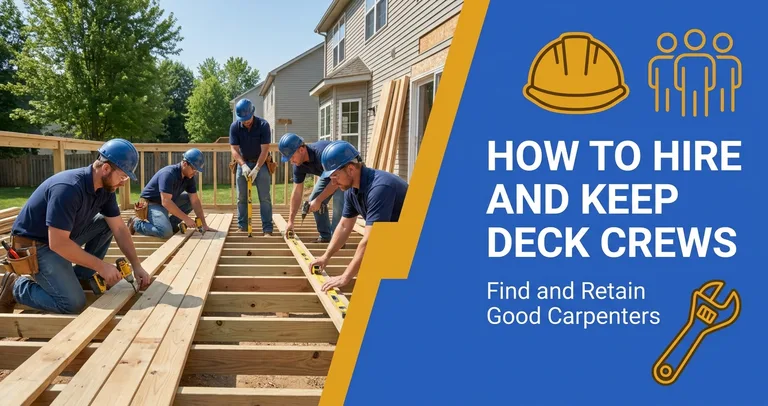
This is owner-to-owner: how to find carpenters and laborers who can actually build, how to screen out the flakes before they cost you a job, how to pay in a way that keeps your fastest builders motivated, and how to build the kind of crew culture that makes your best people stay when a competitor waves a dollar more an hour at them.
Where to Actually Find Deck Builders and Laborers
The good carpenters are almost never scrolling job boards. They are already working, either for you, for a competitor, or for themselves doing weekend side jobs. So you have to fish where they actually are.
Your current guys are your best recruiters. A carpenter who likes working for you knows three or four others in the trade. Put a referral bonus on the table, something real like a few hundred dollars paid after the new hire makes it 60 or 90 days. Tie it to retention, not just the hire, so your crew brings you people who will stick.
Poach quietly and ethically. When you are on a supply run at the lumberyard or the composite dealer and you watch a crew load up fast and clean, that tells you something. Material desk staff, deck product reps, and railing distributors know who the steady builders are. A rep who likes you will tell you which company just lost a job or is bleeding people.
Laborers are a different funnel. For the guys who haul, dig footings, and demo old decks, you are hiring for attitude and a body that shows up, not finish skill. Trade schools, community college construction programs, and even the better temp-labor outfits can feed you green hands you train up. The best lead carpenters in your company probably started swinging a sledge on a tear-out.
Run real ads, not lazy ones. If you post, write the ad like the owner you are, not HR. Say what you build (custom decks, composite, multi-level, screen rooms), what you pay range, that you run year-round or your off-season plan, and that you actually pay on time. Half the trade has been burned by a contractor who paid late or short. Saying you do not is a real differentiator.
If recruiting is eating your week and you would rather your phone ring with booked deck jobs than resumes, that is the side we handle. We can keep your crews busy with exclusive deck building leads so the growth pressure is on production, where you want it, not on chasing work.
Screen for Skill and Reliability Before They Touch a Job
Anybody can say they have ten years of deck experience. Your job is to find out in an afternoon whether that is true, and more important, whether they show up.
Give a paid working interview. This is the single best filter in the trade. Bring the guy out for a half day or a full day on an active job and pay him for it. You will learn more in four hours of watching him set joists than in any sit-down. Does he keep his cuts square? Does he flush-cut and dress a board, or leave it rough? Does he ask smart questions or fake it? Does he stand around when the lead is not looking?
Probe the real skills, not buzzwords. Ask how he handles ledger flashing and lag spacing, how he frames around a bump-out, how he hides fasteners on a composite surface, how he keeps a long run of decking from drifting out of line. A real deck carpenter answers these in his sleep. A guy who has only done fences or general framing will stumble, and that is fine to know up front.
Reliability beats raw skill. A B-plus carpenter who shows up at 6:55 every single morning is worth more than an A-plus builder you can never count on. In the working interview and the first two weeks, watch the boring stuff: Is he early or late? Does he text when something is wrong, or just ghost? Does he take care of your tools and your truck? Those habits do not change once you hire him.
Check the basics that protect your business. Valid license to drive your truck and trailer, legal to work, and a clean enough record if he is handling customer interaction in someone's backyard. For anyone you might make a lead or send out solo, references from past contractors are worth the ten-minute call.
Pay Structures: Hourly, Piece, and Production Bonus
How you pay shapes how your crew behaves. Get this wrong and you either pay for slow work or you push guys to rush and create callbacks. There is no single right answer, but here is how the three main structures actually play out on deck jobs.
Hourly
Simple, predictable, and what most laborers and newer carpenters expect. The downside is obvious: you pay the same whether the crew frames a deck in two days or four. Hourly works best for green hands, demo and dig labor, and any phase where you want care over speed. Pay competitively for your market and review it, because the carpenter making the same rate he made two years ago is already half out the door.
Piece or per-square-foot
Some deck builders pay framing and decking crews by the square foot of finished deck, or a flat number per completed job. This rewards speed and lets your fastest builders earn real money. The risk is corner-cutting: rushed flashing, sloppy fastener spacing, gaps that come back as callbacks. If you go piece-rate, you have to pair it with a quality standard and hold back the corner-cutters. It works best with experienced crews you trust and on repeatable job types.
Hourly plus production bonus
For most established deck companies this is the sweet spot. Pay a solid hourly base so guys feel secure, then add a bonus when a job comes in on or under the labor hours you bid, with no callback. Now your interests line up: the crew wants to be efficient and clean, because sloppy work that triggers a return trip kills the bonus. Bonus the whole crew, not just the lead, so the laborer who hustles shares in it and the lead does not have to drag dead weight.
One rule across all three: bid your labor honestly so the numbers are real. If your estimates are fantasy, your bonus program becomes a punishment, and your crew figures that out in one season.
Subcontractor vs Employee: When Each Makes Sense
Every deck builder wrestles with this. Subs give you flexibility and no payroll burden in the slow months. Employees give you control, consistency, and a crew that actually represents your brand. The right mix depends on how you run.
Subs make sense for overflow and specialty work. When you book three big jobs in the same two weeks, a trusted sub crew lets you say yes instead of pushing the customer out a month. They are also right for the specialty trades you do not keep in-house: the electrician wiring deck lighting and the outdoor kitchen, the mason on a stone base, the welder on custom steel railing. You are not going to keep those skills on payroll year-round.
Employees make sense for your core production. The crews building the bulk of your decks should be yours. They learn your standards, your fastener system, your flashing details, the way you want a job site to look when the homeowner gets home. You cannot build a brand on quality and consistency if a rotating cast of subs is doing the actual building. Your repeat-and-referral business lives and dies on that consistency.
Know where the legal line is. This is the part that bites contractors. If you control a worker's hours, tell him exactly how to do the job, provide all the tools, and he works only for you, the law in most places treats him as an employee no matter what your paperwork says. Misclassifying a full-time guy as a 1099 sub to dodge taxes and insurance is how owners end up with back-tax bills, penalties, and a workers-comp nightmare if someone falls off a deck. When in doubt, talk to your accountant before you set the relationship, not after the audit.
A practical mix: a core of employee crews for your bread-and-butter decks, plus a short bench of trusted subs you call for overflow and specialty trades. That gives you consistency where it matters and flexibility where it pays.
The Culture That Keeps a Crew From Walking Mid-Season
You can hire well all day and still bleed people if the job is miserable to work. Retention in this trade is not about ping-pong tables. It is about respect, money that keeps pace, and a reason to stay past the next dollar an hour.
Pay on time, every time, no excuses. This sounds basic and it is the number-one reason carpenters leave a contractor. If a guy cannot trust that his check clears on Friday, nothing else you do matters. Be the company in your market that always pays right and on time, and word gets around.
Keep them busy, including the off-season. Nothing pushes a good builder to a competitor faster than getting sent home three days a week when work is slow. If you are in a seasonal market, have a plan: interior carpentry, repairs, smaller projects, or steady enough booked work to carry the crew. A full schedule is itself a retention tool, which is the whole point of a steady flow of deck building marketing that keeps jobs on the board instead of gaps.
Give your leads ownership, not just orders. Your best carpenter wants to be trusted to run his crew and make calls in the field. Let him. Pay him like the asset he is, bring him into bids on the jobs he will build, and he stops looking around. Lose him and you lose the two laborers who liked working for him too.
Run safe, clean job sites and decent gear. Working with broken tools, no shade, and a boss who screams burns guys out fast. Buy good fasteners and blades, keep the truck stocked, provide water and the right safety gear, and treat the crew like professionals. It costs little and it tells them you value their day.
Have a path. A laborer who can see himself becoming a carpenter, and a carpenter who can see himself becoming a lead or a foreman, has a reason to stay and get better. Train people up on purpose. The crew you grow yourself is far more loyal than the one you keep buying off the open market.
Frequently Asked Questions
What should I pay a lead deck carpenter versus a laborer?
It varies a lot by region, so anchor to your local market, not a national number. The general shape: a skilled lead carpenter who can run a crew and read a plan should earn meaningfully more than a green laborer, often a wide gap. The bigger mistake than the exact rate is letting a proven lead's pay stagnate. If he is still at the rate you hired him at two years ago, he is already being recruited by someone else.
Is it better to hire experienced carpenters or train laborers up?
Do both, on purpose. You need a couple of experienced carpenters to set the standard and run crews, and you cannot always buy those off the market when you need them. So you also grow your own by hiring laborers with the right attitude and training them up over a season or two. The trained-up guy is cheaper, more loyal, and builds the way you want, because he learned it from you.
How do I stop losing crews to competitors mid-season?
Three things, in order: pay on time and at market, keep them busy so there are no slow weeks pushing them to look elsewhere, and treat your leads like partners with real ownership over their crews. Money gets you in the game, but most guys do not leave a company where they are respected, busy, and paid right for one extra dollar an hour somewhere unknown. Build that, and a competitor's offer has nothing to beat.