What the Best Tree Service Software Actually Does for a Growing Company
If you are running an established tree service with two or more crews, the math you fight every week is brutal. A bucket truck and chipper sitting in the yard until 9:30 because nobody confirmed the address is burning $150 to $300 an hour in crew labor before a single limb hits the ground. An estimate you scribbled on a clipboard and forgot to send is a $4,000 removal that walks to the next company. A finished job nobody invoiced for eleven days is money you already paid your crew for but have not collected. None of that is a sales problem. It is an operations problem, and the right tree service software is how you stop bleeding from it.
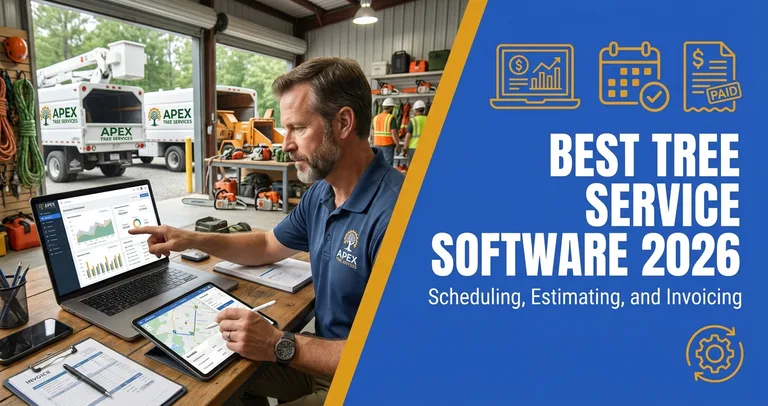
The honest truth is that there is no single "best tree service software" that wins for everybody. The right stack depends on whether you do residential removals, commercial line clearance, plant health care, or a mix, and on how many trucks you are dispatching. What does not change is the set of jobs the software has to do: get crews to the right place on time, turn a walk-up into a signed proposal fast, follow up on leads before they go cold, and bill the second the chips are cleaned up. This guide walks the real categories of tree care software a growing company needs, so you can buy on capability instead of on whoever ran the slickest ad.
We are going to stay practical and category-by-category. We will not invent product names or promise features no tool actually has. Whether you run one all-in-one platform or stitch together a few specialized tools, the goal is the same: more booked jobs, less windshield time, and money in the bank faster.
Scheduling and Dispatch: Stop Burning Crew Hours
Scheduling is where most tree companies leak the most money, and they never see it because it does not show up as a line item. It shows up as a 7-truck week that should have been an 8-truck week. Good tree service scheduling software gives you a visual calendar where every crew, truck, and job is a block you can drag around, with the address, scope, and access notes attached so the foreman is not calling the office at 7am asking where to go.
The features that actually matter for an established shop:
- Crew and equipment assignment. A removal that needs the crane is useless on the calendar if the crane is two towns over. The scheduler should let you assign equipment, not just people, so you do not double-book your one grapple truck.
- Drag-and-drop rescheduling. Rain days and emergency storm calls are the trade. When you have to bump tomorrow, you should be able to slide a whole day of jobs without re-keying anything.
- Automated customer reminders. A text the day before that says "crew arriving between 8 and 10" cuts no-access trips, which on a removal is a full crew standing in a driveway for nothing.
- Job durations that reflect reality. A 90-foot oak takedown is not a 30-minute slot. The system should let you block realistic time so you stop overpromising and running late on the back half of the day.
Most of the well-known field-service platforms built for home-service trades handle this category well, and several have tree-specific or arborist-focused versions. The test is simple: can your dispatcher see every crew's whole week on one screen and move work around in under a minute? If moving a job is a 15-step ordeal, the crews will route around the software and you are back to the whiteboard.
Estimating and Proposals: The Tree Service Estimate App That Wins on Speed
In tree work, the company that gets a clean, professional estimate in front of the homeowner first usually wins the job, especially on the $2,000-plus removals where people get two or three quotes. A tree service estimate app on your phone lets the estimator stand in the yard, build the proposal on the spot, and email it before he is back in the truck. That speed alone is worth more than half the features on most software pages.
What tree service estimate software should do for an established company:
- Build estimates in the field. Line items for removal, trimming, stump grinding, hauling, and crane time, priced from your own saved rate book so a green estimator does not underbid by 30 percent.
- Photos and notes on the estimate. Attaching a photo of the dead leader or the power line proximity protects you on scope disputes later and makes the proposal look like it came from a real outfit.
- Good-better-best options. Letting a customer pick "remove only" versus "remove plus stump plus haul" raises your average ticket without a second sales call.
- E-signature and instant send. Sign on the phone, deposit captured, job drops onto the schedule. No paper, no "I'll think about it" gap where they call your competitor.
Be realistic about pricing engines. No tree service estimate software magically knows what an 80-foot silver maple over a house should cost in your market. It is only as good as the rates and production numbers you load into it. The win is consistency and speed, not a robot pricing your jobs. Get your real numbers in, and every estimator on your team quotes like your best one.
CRM and Lead Follow-Up: Where Most Tree Companies Leave Money
Here is the quiet killer in this trade: most tree companies are excellent at the work and terrible at follow-up. A customer calls, you go look at the tree, you quote it, and then nothing. No second touch. Industry-wide, a large share of quoted tree jobs never close, and a big chunk of those are not lost on price, they are lost on silence. A CRM built into your tree company software is what closes that gap.
The follow-up jobs the system should handle so you do not have to remember them:
- Every lead in one place. Calls, web forms, and walk-ups all land in one list with status, so nothing lives only in a voicemail or a sticky note on the truck dash.
- Automatic estimate follow-up. A quote that has not been accepted in three days should trigger a text or email without anyone lifting a finger. That single automation recovers jobs you are losing right now.
- Customer history. When the same property calls back two years later for the next tree, you already have the address, the access notes, and what you charged. Repeat and referral work is the cheapest work you will ever book.
- Review requests after the job. An automatic ask for a Google review the day after cleanup is how you out-rank the other guys in the map pack over time.
The lead follow-up only matters if leads are coming in to follow up on. If your phone is not ringing enough to keep multiple crews full, software will not fix that, marketing will. That is the part most owners would rather hand off, and it is exactly what we do. You can build the demand engine yourself, or get exclusive tree service leads that come to you and nobody else, then let your CRM make sure none of them slip.
Invoicing and Payments: Get Paid Before the Chips Settle
A finished job that has not been invoiced is the most expensive thing in your business, because you already paid for the labor, the fuel, and the dump fees. Every day it sits uninvoiced is a day your money is funding the customer instead of your next payroll. The invoicing side of your tree care software exists to crush that gap to zero.
What good invoicing and payment handling looks like:
- Invoice from the field on completion. The foreman marks the job done, the estimate converts to an invoice, and it goes out before the truck leaves. Same-day billing dramatically shortens how long you wait to get paid.
- Card and ACH payments built in. On a $3,500 removal, letting the customer tap a card or pay by bank transfer means you collect now instead of waiting on a check that never quite gets mailed. Yes, you eat a processing fee, but a 3 percent fee on money you collect today beats 100 percent of a payment you chase for a month.
- Deposits and progress billing. For big commercial or multi-day jobs, taking a deposit up front and billing in stages keeps your cash flow ahead of your costs instead of behind them.
- Automatic payment reminders. The system, not you, nags the slow-payers on day 15 and day 30 so your office manager is not spending half a day on the phone collecting.
For the books side, the practical move is software that syncs cleanly to whatever accounting platform your bookkeeper already uses, so you are not double-entering every invoice. The category does not need to be fancy. It needs to be fast and connected, because in this trade speed-to-invoice is speed-to-cash.
Routing, Crew Tracking, and Job Costing: Run Multiple Crews Without Guessing
Once you are past one truck, the questions get harder. Which crew is where right now? Did the job that was supposed to take four hours take seven, and did you make money on it or eat it? This is where tree service management software earns its keep, by giving you visibility you simply cannot get from a whiteboard and a group text.
Routing. When you have a full day of stops spread across a metro, the order you run them in matters. Tighter routing means less drive time, less fuel, and sometimes one more job squeezed into the day. You do not need military-grade route optimization, but clustering jobs by area and handing the crew an efficient order is real money over a season of long windshield days.
Crew and time tracking. Clock-in and clock-out from a phone, tied to the actual job, tells you the truth about labor. It also stops the gray-area timesheet padding that quietly inflates your biggest cost. When a foreman clocks the crew onto a job, you know your real labor hours against what you bid.
Job costing. This is the one most owners skip and the one that separates a shop that grows from a shop that just stays busy. When the system ties labor hours, equipment, and dump fees back to each job, you finally see which kinds of work actually make money. A lot of companies discover their bread-and-butter trimming is thin margin while the big removals carry the business, or the reverse. You cannot fix what you cannot see, and guessing at job profitability is how busy companies stay broke.
Field crews will only feed the system if it is dead simple on a phone with gloves on. If logging time or marking a job done takes more than a couple taps, it will not happen consistently, and half-entered data is worse than none because it lies to you.
All-in-One vs. Stitching Tools Together: How to Choose
The big decision is whether to run one all-in-one platform that does scheduling, estimating, CRM, and invoicing under one login, or to pick a specialized tool for each job and connect them. Both are legitimate. Here is the honest tradeoff.
All-in-one wins on simplicity. One system, one place your data lives, the estimate flows to the schedule flows to the invoice without you copying anything. For most growing residential tree companies, this is the right default. You give up some best-in-class polish in any single area, but you gain a team that actually uses the software because there is only one thing to learn.
Best-of-breed wins on depth. If estimating is your bottleneck and you want the sharpest proposal tool on the market, or your commercial side needs heavy-duty job costing, separate specialized tools can beat the generalist. The cost is integration headaches and the risk that two systems fall out of sync. Only go this route if you have someone who will own keeping the tools talking to each other.
A few rules that save you from buyer's remorse:
- Buy for the company you are becoming, not the one you were. If you are running two crews and adding a third, do not pick the tool that caps out at one calendar.
- The crew's experience decides adoption. Owners buy software on the office dashboard. Whether it sticks is decided by whether the foreman can use it in the field in three taps. Test it in the truck before you commit.
- Run a real trial on real jobs. Push a full week of actual estimates, schedule changes, and invoices through it before you migrate. Demos are designed to look perfect. Your messy Tuesday is the real test.
- Get your numbers loaded. Whatever you buy, the value is in your rate book, your production rates, and your follow-up automations. Budget a weekend to set it up right or it will sit half-used.
Software tightens your operation and protects your margin, but it does not create demand. If the real constraint is not enough phone calls to keep your crews booked, the highest-leverage move is fixing where your jobs come from, not which calendar app you run. If you want a straight answer on whether your bottleneck is operations or lead flow, book a strategy call and we will tell you what we would do in your market.
Tree Service Software FAQ
What is the best tree service software for a company running multiple crews?
There is no single winner, but for most multi-crew residential operations an all-in-one field-service platform with strong scheduling, a mobile estimate app, built-in CRM follow-up, and invoicing with card payments is the right default. The deciding factor is whether your foremen will actually use it in the field. Buy the tool your crews will adopt, not the one with the longest feature list, and make sure it handles assigning equipment and not just people.
Do I need separate tree service estimate software, or is one platform enough?
For most companies one platform is enough, and it is better. When your estimate flows straight into the schedule and then into the invoice with no re-keying, you book and bill faster with fewer mistakes. Only split out a dedicated tree service estimate app if estimating is your specific bottleneck and you have someone who will keep the separate tools synced. Either way, the estimate tool is only as good as the rates you load into it.
Will tree service management software get me more jobs?
Indirectly, yes, but not the way most owners hope. Software books more of the leads you already get by killing slow follow-up, slow estimates, and missed appointments, and it protects margin through job costing. What it does not do is make your phone ring. If your crews are not full, the fix is demand, through better marketing or done-for-you exclusive leads, paired with the software to make sure none of those leads slip through the cracks.