The Wrong Machine Can Cost You $100,000 a Year in Idle Iron. Here's the Math.
You already run a real land clearing operation. Your trucks roll out before sunrise, your crew knows the difference between a light brush job and a stump-choked grubbing job, and you are the one who signs the paychecks and the equipment notes every month.
You are not trying to figure out how to start. You are trying to figure out which machines actually make you money, which ones bleed you on fuel and teeth, and where the line sits between buying iron and renting it for the season.
That decision is bigger than most operators admit. The wrong forestry mulcher can lock you into a $9,000 monthly payment on a machine that sits in the yard half the year.
The right compact track loader with the right head can turn a two-day brush job into a same-day knockout that pays for itself in one weekend. Equipment choice is not a gearhead conversation. It is the single biggest lever on your bid, your margin, and how many acres you can clear before the next invoice.
This guide is written for the owner who already has work and wants to run the right machines profitably. We will walk the core fleet piece by piece, match each machine to the job type it actually wins, lay out real 2026 buy, rent, and finance numbers, and show how productivity and wear feed straight into the price you put on a quote.
No theory. Just the machines, the dollars, and how to choose.
Why Most Operators Buy the Wrong Machine First
Here is the trap that catches good operators. You land a few heavy wooded jobs, you fall in love with the idea of a dedicated forestry mulcher, and you finance a $350,000 purpose-built mulching tractor before you have the steady contract volume to keep it busy.
Then the heavy work dries up for a quarter, the payment does not, and you are bidding light brush jobs you could have knocked out with a $90,000 skid steer just to cover the note.
The machine that makes you the most money is not the most powerful one. It is the one that matches the work you actually book week after week.
Most established land clearing companies do the bulk of their revenue on residential lots, fence lines, brush mitigation, and trail clearing. That is compact track loader territory, not dedicated forestry tractor territory.
Before you spend a dollar on iron, pull your last 12 months of jobs and sort them by type:
- Light brush and undergrowth (saplings under 4 inches, overgrown fields, fence lines)
- Medium wooded (4 to 8 inch trees, mixed brush, residential lots)
- Heavy wooded (8 inch and up, dense timber, full acreage clearing)
- Selective clearing (leave the keepers, take the rest, no soil disturbance)
- Grubbing and grading (roots out, stumps gone, dirt moved, build-ready)
- Haul-off (debris, logs, and brush trucked off site)
Whatever bucket holds 60 percent or more of your revenue is the machine you buy first. Everything else, you rent until the volume justifies owning. That one discipline separates the crews that scale from the ones that drown in equipment debt.
The Forestry Mulcher: Your Money-Maker on Wooded Jobs
The forestry mulcher is the machine that turned land clearing from a two-week dozer-and-burn operation into a one-day, one-pass job. A rotary drum or disc head spins teeth at high speed, grinds standing trees and brush into mulch, and leaves it on the ground as erosion control.
No burning, no haul-off on most jobs, no piles. That is why mulching has taken over the residential and mitigation market.
There are two ways to run a mulcher, and the difference matters for your wallet.
Dedicated Forestry Mulching Tractor (Purpose-Built)
These are the high-horsepower, purpose-built machines, think a Fecon FTX, a Gyro-Trac, or a Prinoth Raptor. They run 250 to 600+ horsepower, they eat 8 to 12 inch trees without slowing down, and they are built for full-day heavy production on big acreage.
If your bread and butter is clearing 10, 20, 50 acre wooded tracts for developers, this is the machine that wins those bids on speed.
The catch is the price. A new dedicated mulching tractor runs $250,000 to $500,000+. Used machines with real hours start around $120,000 to $200,000. You need consistent heavy acreage to justify it. If it sits, it kills you.
Mulching Head on a Compact Track Loader or Excavator
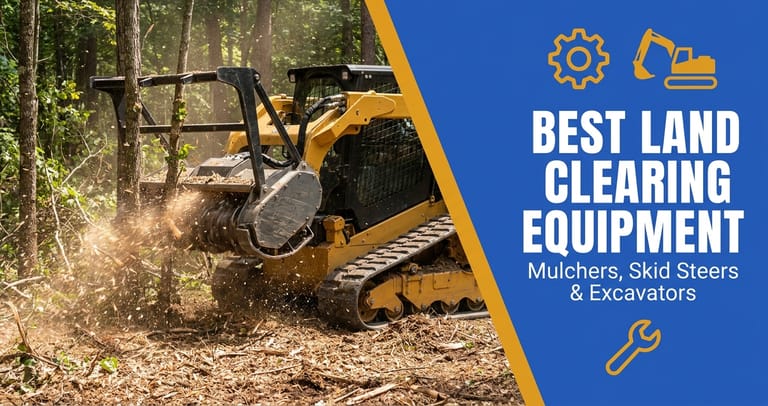
This is where most operators should start. You run a high-flow drum or disc mulching head as an attachment on a compact track loader or an excavator. The head handles trees up to roughly 6 to 8 inches and clears brush all day.
A quality mulching head runs $8,000 to $25,000 depending on whether it is a drum or disc and the build quality.
The advantage is flexibility. The same CTL that runs your mulching head this morning runs a grapple, a bucket, or a grading attachment this afternoon. One machine, many jobs, one payment.
For the established operator doing mixed residential and light commercial work, a high-flow CTL plus a good mulching head is the highest-margin setup in this whole guide.
The single most common margin mistake we see: an operator buys a $350,000 dedicated mulcher to do work a $110,000 high-flow CTL with a $15,000 head could have handled. The big machine looks impressive on the lot. The CTL pays the mortgage.
On mulcher teeth: budget for wear. Carbide teeth on a drum head can run $15 to $40 each, and a full head holds anywhere from 30 to 70+ teeth. Rocky or sandy ground chews them up fast.
A heavy production crew can spend $300 to $1,500 a month on teeth alone. That is a real line item that belongs in your per-acre bid, not a surprise that eats your profit at the end of the month.
The Compact Track Loader: The Workhorse That Pays the Bills
If you could own only one machine, this is it. The compact track loader, the skid steer on tracks, is the most versatile, most rentable, most resaleable machine in land clearing.
Brands like Bobcat, CAT, Kubota, and Takeuchi all build solid high-flow units, and the high-flow hydraulics are what make the mulching head work.
The key spec to chase is high-flow auxiliary hydraulics. A standard-flow machine cannot drive a mulching head hard enough to be productive. You want a high-flow or enhanced-high-flow CTL in the 90 to 120+ horsepower range.
That combination runs a mulcher, a brush cutter, a grapple, a stump grinder attachment, a grader, and a bucket. One machine covers most of your fleet.
Rough 2026 numbers:
- New high-flow CTL: $85,000 to $140,000 depending on size and brand
- Used (1,000 to 2,500 hours): $45,000 to $85,000
- Rental: $1,800 to $3,500 per week, or roughly $4,500 to $8,000 per month, attachment often separate
The wear point to watch is the undercarriage. Tracks, rollers, idlers, and sprockets are the expensive part of owning a CTL. A full undercarriage rebuild can run $8,000 to $18,000.
Run your machine on abrasive, rocky ground all day and you will hit that sooner than the hour meter suggests. Keep the tracks tensioned right, blow out the undercarriage daily, and you protect thousands of dollars of iron.
Build a track-replacement reserve into your numbers the same way you build in fuel.
Excavators, Dozers, and the Heavy Iron for Grubbing and Grade
Mulching leaves the roots in the ground. The minute a developer or builder needs the lot build-ready, with stumps and root balls gone and the dirt graded, you are past what a mulcher can do. That is heavy iron territory.
Excavator With a Mulcher or Grapple
An excavator earns its keep two ways on a clearing job. With a mulching head on the boom, it gives you reach, so you can mulch on slopes, along banks, and over obstacles a CTL cannot safely climb.
With a grapple, it loads logs and brush onto trucks fast, and it rips stumps and root balls straight out of the ground.
- New mid-size excavator (13 to 20 ton): $130,000 to $250,000
- Used: $60,000 to $140,000
- Rental: $3,000 to $6,000 per week
- Excavator mulching head: $18,000 to $40,000
- Hydraulic thumb or grapple: $4,000 to $12,000
Dozer
The dozer is still the right tool for big land grubbing, pushing piles, ripping roots over large acreage, and rough grading. A D5 or D6 class machine pushes through dense growth and moves volumes of material no CTL can touch.
On a 40 acre subdivision clear-and-grade, a dozer is not optional.
- New small-to-mid dozer (D4 to D6 class): $150,000 to $400,000+
- Used: $70,000 to $200,000
- Rental: $4,000 to $9,000 per week
Here is the honest call for most operators: you do not buy a dozer until you have steady large-acreage grubbing contracts. It is the easiest machine to rent on a per-job basis, the rental fleets keep them maintained, and a $7,000 weekly rental on a one-week dozer job is far cheaper than a $200,000 machine that runs four weeks a year.
Own what runs every week. Rent the heavy specialist iron.
Stump Grinders, Grapple Trucks, and the Haul-Off Problem
Two parts of the job quietly decide whether a clearing project makes money: getting the stumps gone and getting the debris off site.
Stump Grinders
On selective and residential jobs where you cannot grub the whole lot, a dedicated stump grinder finishes the work clean. You can run a self-propelled stump grinder, or a stump-grinder attachment on your CTL.
- Self-propelled stump grinder: $15,000 to $60,000 new, depending on horsepower
- CTL stump grinder attachment: $8,000 to $20,000
- Rental: $300 to $700 per day for a towable unit
For most operators, the attachment is the smart buy. It rides on a machine you already own and you skip a second engine to maintain.
Grapple Trucks and Trailers for Haul-Off
Mulching avoids haul-off on a lot of jobs, which is exactly why it took over. But on grubbing jobs, demolition clearing, and any site where the customer wants the debris gone, haul-off is real cost.
A grapple truck or a dump trailer behind a one-ton lets you load and move logs and brush without renting a roll-off for every job.
- Grapple truck (used): $45,000 to $120,000
- Heavy-duty dump trailer: $12,000 to $30,000
- Roll-off dumpster rental (per haul): $400 to $800
The owner mistake here is forgetting to price haul-off into the bid. Debris does not disappear. Tipping fees, fuel, and crew hours to load and drive add up fast on a grubbing job.
Build it into the quote line by line or it eats the margin you thought you had.
Match the Machine to the Job (and the Money)
Here is the whole fleet in one view. Use it to sanity-check what you own against the work you book, and what you should be renting instead of buying.
| Machine | Best For | Rough 2026 Cost / Rate |
|---|---|---|
| High-flow compact track loader (CTL) | Light to medium brush, residential lots, the everyday workhorse | $85K-$140K new · $1,800-$3,500/wk rent |
| Mulching head (CTL or excavator attachment) | Brush and trees up to 6-8 in, no haul-off, mixed work | $8K-$40K attachment |
| Dedicated forestry mulching tractor | Heavy wooded, large acreage, full-day production | $250K-$500K new · $4K-$9K/wk rent |
| Excavator + mulcher or grapple | Slopes, reach, log loading, ripping stumps and root balls | $130K-$250K new · $3K-$6K/wk rent |
| Dozer (D4-D6 class) | Big grubbing, pushing piles, rough grading, build-ready | $150K-$400K+ new · $4K-$9K/wk rent |
| Stump grinder (unit or attachment) | Selective and residential stump removal, no full grub | $8K-$60K · $300-$700/day rent |
| Grapple truck / dump trailer | Haul-off of logs, brush, and debris | $12K-$120K · $400-$800/haul roll-off |
The pattern in that table is the whole strategy. The CTL and its attachments run every week, so you own them.
The heavy specialist iron, the dedicated mulcher and the dozer, run on the big jobs, so you rent them until the volume is steady enough to justify the payment. That is how you keep a full fleet of capability without a full fleet of debt.
Buy, Rent, or Finance: The Math That Protects Your Margin
The wrong answer here does more damage than any single bad job. Let us make it simple.
When Renting Beats Owning
Rent the machine when any of these are true:
- You use it less than 40 to 50 percent of the year. Below that, rental almost always wins on total cost.
- It is a heavy specialist machine, a dozer or a dedicated mulcher, and your steady work does not demand it.
- You are testing whether a job type is worth chasing before you commit capital.
- You need a second machine for a short burst of big contracts and do not want to carry it after.
Rental fleets handle maintenance, repairs, and the depreciation hit. On a machine you run a few weeks a year, that is a bargain.
A $7,000 weekly dozer rental for the four weeks a year you actually need one costs you $28,000. Owning that same dozer ties up $150,000+ and costs you in payments, insurance, storage, and maintenance every single month whether it works or not.
When Owning Wins
Buy the machine when it runs nearly every week, when you can keep it at 60 percent or better utilization, and when the work that feeds it is locked into your calendar, not hoped for. Your CTL and your core attachments belong here.
The math flips in favor of ownership once a machine is producing revenue most weeks of the year, because then you are paying down an asset instead of paying a rental company's profit.
How to Think About Financing
Most equipment gets financed, and that is fine when the machine pays for itself. The discipline is this: the monthly payment has to be a fraction of what the machine earns in a normal month, not most of it.
If a $110,000 CTL costs you roughly $2,000 to $2,400 a month financed and it produces $25,000 to $40,000 in clearing revenue most months, that is a healthy buy.
If a $350,000 mulcher costs you $6,500 a month and you cannot keep it busy enough to clear that plus operating costs and profit, that machine owns you, not the other way around. Run the payment against realistic monthly utilization before you sign, every time.
Productivity, Wear, and How Equipment Drives Your Bid
Equipment choice is not a back-office decision. It sets the number on your quote. Two crews bidding the same 5 acre wooded lot will come in thousands of dollars apart purely on what they run and how fast it produces.
Rough Daily Production by Machine
Use these as starting points and calibrate to your own ground and growth density:
- CTL with mulching head, light brush: 1 to 3 acres per day
- CTL with mulching head, medium wooded: 0.5 to 1.5 acres per day
- Dedicated forestry mulcher, heavy wooded: 2 to 5+ acres per day
- Excavator mulcher on slopes and tough access: 0.5 to 2 acres per day
- Dozer grubbing and grading: highly variable, but volume work no smaller machine matches
Those numbers are why the right machine matters. If a dedicated mulcher clears a heavy 20 acre tract in 5 days and a CTL would need 18, the dedicated machine is the only profitable way to bid that job, even at the rental rate.
On a 2 acre residential lot, the opposite is true. The CTL wins because the dedicated machine is overkill you are paying to truck in.
Wear Is a Bid Line, Not a Surprise
Every quote you write should carry these as named costs, the same as fuel and labor:
- Mulcher teeth: figure your real teeth cost per acre on your typical ground. Rocky sites can double it.
- Undercarriage reserve: set aside a per-hour amount toward the next track and roller job so the rebuild never hits you cold.
- Hydraulic and head maintenance: high-flow mulching runs hot and hard on seals, hoses, and bearings.
- Fuel: high-horsepower mulching burns serious diesel under load. Track gallons per hour by machine.
When you bid off real production rates and real wear costs, your margin holds whether the lot is easy or brutal.
When you bid off a gut feel and forget the teeth and the undercarriage, the brutal jobs quietly erase the profit from the easy ones. The fleet is only as profitable as the numbers behind your quotes.
How Home Service Direct Keeps Land Clearing Crews Booked
You can own the perfect fleet, the high-flow CTL, the right mulching head, the excavator and grapple for the heavy work, and still struggle if the machines are sitting in the yard.
Idle iron does not care how well-chosen it is. A mulcher that is not on a job is a payment with no revenue behind it.
That is the part we handle. You run the equipment. We keep your phone ringing with the right jobs so those machines stay billable.
- Exclusive land clearing leads sent only to your company, never shared with five competitors, so your crew quotes work that actually closes instead of racing four other bids to the bottom.
- The right job mix for the machines you run. We target by property size and job type so you get the wooded acreage and grubbing work that feeds your bigger iron, not just $300 brush jobs.
- Marketing across Google, Local Service Ads, and Facebook built specifically for land clearing, so a developer with 30 acres to clear finds you before they find the operator two counties over.
- Tracking on every lead so you know which jobs and channels are filling your schedule and keeping utilization high enough to justify every machine you own.
If you want your fleet running at the utilization that makes ownership pay, see how our land clearing lead program works. You bought the machines to clear land, not to chase quotes. Let us keep them busy.
Frequently Asked Questions
What is the best all-around machine for a land clearing business?
For most established operators, a high-flow compact track loader in the 90 to 120+ horsepower range is the single best machine to own. Pair it with a quality mulching head and it handles the brush and medium-wooded work that makes up the bulk of land clearing revenue, then switches to a grapple, bucket, grader, or stump grinder for everything else. One machine, one payment, most of your job types covered. You rent the dedicated mulcher and the dozer for the heavy specialist jobs until your volume justifies owning them.
How much does a forestry mulcher cost in 2026?
It depends on whether you mean a dedicated machine or an attachment. A purpose-built forestry mulching tractor runs roughly $250,000 to $500,000 or more new, and $120,000 to $200,000 used with real hours. A mulching head you run on a compact track loader or excavator you already own costs about $8,000 to $40,000 depending on whether it is a drum or disc head and the build quality. For most operators, the attachment route is far more profitable because the carrier machine earns money on other jobs too.
When should I rent equipment instead of buying it?
Rent when you will use the machine less than about 40 to 50 percent of the year, when it is a heavy specialist like a dozer or dedicated mulcher that your steady work does not demand, or when you need a short burst of extra capacity for big contracts. Rental fleets carry the maintenance and depreciation, which is a bargain on a machine you only run a few weeks a year. Own the iron that runs nearly every week, like your CTL and core attachments, and rent the rest per job.
What are the biggest hidden costs of running land clearing equipment?
Three line items quietly eat margins: mulcher teeth, undercarriage wear, and haul-off. Carbide teeth run $15 to $40 each and a busy crew can spend hundreds to over a thousand dollars a month replacing them, more on rocky ground. A compact track loader undercarriage rebuild can run $8,000 to $18,000. And on grubbing jobs, trucking debris off site adds tipping fees, fuel, and crew hours. Price all three into every bid as named costs so the hard jobs do not erase the profit from the easy ones.
Do I really need a dozer for a land clearing company?
Not usually, and not first. A dozer is the right tool for large-acreage grubbing, pushing piles, ripping roots, and rough grading on build-ready jobs, but most clearing revenue is mulching and brush work that never needs one. Because a dozer is easy to rent per job at $4,000 to $9,000 a week and the rental fleets keep them maintained, most operators come out ahead renting one for the few big contracts that demand it rather than carrying a $150,000-plus machine that runs a handful of weeks a year.
How does equipment choice affect what I should bid?
Directly. Your production rate and your wear costs both come from the machine you run, and both belong in the quote. A dedicated mulcher clearing 3 acres a day on heavy timber lets you bid a big wooded tract profitably that a slower compact track loader could not. On a small residential lot, the CTL wins because the dedicated machine is overkill you are paying to haul in. Bid off your real acres-per-day for the machine on the job, then add named lines for teeth, undercarriage reserve, fuel, and haul-off. That is how your margin holds whether the lot is easy or brutal.